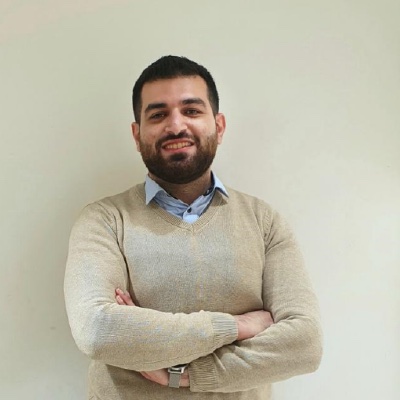
AWS ABDULFATTAH

YOU ARE HERE · CENTRAL GATEWAY

I ask why. Then I build what makes sense.

Payments, products, infrastructure and AI. More than a million people use my work. Some are on slow networks and old phones. It still has to work.

NOWSenior Software EngineerQi Card · promoted March 2026 ALSOFounding Engineer & Technical LeadCardyiq · managing a team of 10 BEFOREArchitectNine years in architecture and construction
ASKED WHY BUILT IT FIXED IT SHIPPED IT LEARNED FROM IT
Fintech

QI CARD · SUPERQI · ALIPAY MINI APP PLATFORM

Three products inside SuperQi.

Three different products, all trying to make financial information feel simple the first time.

3products
1M+users
Alipaymini-app platform
3languages
01

Tasdid+

A billing and invoicing system inside the SuperQi ecosystem, from bill inquiry and invoices to payment states and clear errors.

02

Jabi+

Merchant finance inside SuperQi. Statements, salaries, supplier payments and Excel exports designed for a phone.

03

e-Psule

A billing app for the Kurdistan Region, available in Kurdish, Arabic and English.

The platform

SuperQi uses Alipay's mini-app platform and APIs. I built against the Alipay APIs and Qi Card's payment rails, then handled the product layer around them: caching, provider differences, payment states, loading and the small details users actually feel.

What mattered

The real job was making billing feel obvious to normal people, often over 50 and using it for the first time. The flow had to explain itself without expecting anyone to understand how the payment system worked underneath.

STACK · TypeScript · Svelte / SvelteKit · Node.js · C# · ASP.NET · Alipay APIs · SuperQi APIs · tokenized payments

Sports
Tech

CARDYIQ · FOUNDING ENGINEER & TECHNICAL LEAD

Cardyiq needed more than a technical fix.

The product was already live. I worked across the code, business model, team and daily operation to make it healthier.

150+venues · 6 cities
1,500subscribers
70M IQDGMV in 7 months
99.9%uptime
PRODUCT

Entry passes were making the product too narrow. I helped replace them with points and subscriptions, then reworked the member and venue experience around the new model.

ENGINEERING

I rebuilt and stabilised the backend, dashboard and mobile app while people were still using them. I also fixed reachability on Iraqi networks, added payments and made deployment and recovery much safer.

BUSINESS + TEAM

I work on pricing, venue onboarding, support, release planning and the daily decisions behind scaling the product. I now manage 10 people and still stay close to both the product and the code.

Where it is now

150+ venues in 6 cities. 1,500 active subscribers, 10K+ installs, 70M IQD GMV and 99.9% uptime. We also went through a serious data incident and recovered with zero records lost.

STACK · Flutter · React · TypeScript · Laravel · MySQL · Redis · Docker · CI/CD · payment integrations

Genealogy
Tech

FAMILY HISTORY · AI RECOGNITION · AI-GENERATED ART

A family tree that starts with old photos and ends on the wall.

The app helps build the tree. The final result becomes a printed piece made for that family.

I built Asheerty as a complete consumer product: the mobile app, backend, dashboard, order flow and fulfilment tools. I am now building the full technical cycle around the tree.

  1. 01Data entryThe user adds names, relationships, photos, documents and old family trees.
  2. 02AI tree readingAI reads old family trees and other family material, finds connections and builds a first version of the tree inside the app.
  3. 03User reviewThe user checks and corrects the people and relationships before they are saved to the database.
  4. 04The living treeThe tree stays interactive and keeps changing as the family updates it.
  5. 05AI custom artworkAI helps turn the reviewed tree into an organic composition, then we refine it and prepare it for print.

The full cycle

AI is used at both ends of the process. First, it reads old family trees and other family material, finds names and connections, and builds an initial tree inside the app. The user reviews and corrects the result before the people and relationships are stored in the database.

The reviewed tree becomes the input for a second AI process. AI creates the layout and shapes it into an organic tree. I then refine the family-specific artwork and prepare the final version for printing.

STACK · React Native · React · Bun · Express · AI image analysis · AI recognition · database · interactive tree · AI image generation · print fulfilment

Notification
Infra

NOTIFYX · NOTIFICATION INFRASTRUCTURE

I got tired of rebuilding notifications, so I built NotifyX.

One API, one dashboard and one place to see what failed.

What it handles

Every product needed the same mix of providers, queues, retries, scheduling and delivery status. I stopped copying the setup and built it as its own system. NotifyX now handles FCM, APNS, HMS and Web Push for five companies, with each worker benchmarked at about 150 messages per second. The code is public at github.com/awsdang/notifyx.

LIVE VIEW · HOW A MESSAGE MOVES 0 delivered · 0 retried

Every dot is a message. If a provider fails, the message moves into the retry path and tries again.

STACK · Node.js · BullMQ · Redis · PostgreSQL · Prisma · React · web / Flutter / RN SDKs

E-commerce

SADEEK · AI-ASSISTED SECOND-HAND SELLING

One photo becomes a live listing.

The seller stays in Telegram. The product page lands on sadeek.app.

10K+users
150K+AI requests
40Kmonthly visitors

The flow

A seller sends one rough phone photo through Telegram. Sadeek improves the image, writes the title and description, suggests a price, checks the result and publishes it to a storefront at sadeek.app.

What happens to the photo

The product does more than generate copy. It edits the photo, removes the background, improves the lighting and presentation, then writes and publishes the listing. I built the flow so the seller can review or change any step without starting over.

STACK · Node.js · PostgreSQL · Next.js · Tailwind · OpenAI · Gemini · n8n · Telegram Bot API

HRTech

MAAAHR · HRTECH · HACKATHON BUILD · OPENAI REALTIME API

A mock interview that talks back.

You speak naturally, interrupt when you need to and get a useful report at the end.

Maaahr is an HRTech prototype for interview practice. It started as a text-based project, then I rebuilt the experience during a hackathon around the OpenAI Realtime API. The prototype asks questions for the role you choose, listens, shows live subtitles and gives structured feedback after the interview.

The difficult parts were latency, interruption and keeping voice, transcript and evaluation in sync without making the conversation feel robotic.

STACK · Next.js · Supabase · OpenAI Realtime API · GPT · Gemini · live transcription · structured evals

HAWSR

HAWSR · CONSTRUCTIONTECH · MY FIRST COMPANY

My architecture thesis became my first company.

That is where software stopped being a side interest.

HAWSR moved Revit models into the browser so construction teams could work with them more easily. It started as my master's thesis, won first prize at The Station Foundation incubator and became a real company.

We had real customers, around $60K in revenue and a team of six. It was the first time I had to lead people while learning product, sales and software at the same time.

The company eventually closed when funding disappeared and the market proved too small. It still gave me my first serious product, customers, revenue, a reason to move fully into software and my first real experience leading a team.

STACK · Three.js · React · Next.js · Django

Origins

ARCHITECTURE · BIM · RECONSTRUCTION

I spent nine years in architecture before I wrote software full time.

That background still shapes how I understand systems, people and constraints.

The work before software

Before UNOPS, I worked with several high-end architecture and design studios, taking responsibility for construction projects worth more than $3M each. Later, with UNOPS in Anbar, I managed a reconstruction and rehabilitation program covering around 1,500 homes, helping families return to safe, usable houses.

How software started

I began by automating repetitive Revit work with Dynamo and Python. I was curious about how far that could go, and eventually the scripts became more interesting to me than the drawings.

What stayed with me

Architecture taught me to plan, explain decisions, work with many different people and take real-world constraints seriously. I use the same habits in software now.

HOW I WORK

Five things I keep coming back to.

  1. Find the real problem, not the first one.

    Sometimes it is code. Sometimes it is pricing, UI, process or a decision nobody has made yet. I try to understand that before I start building.

  2. Change live systems in small steps.

    Most of my major rebuilds happened while people were still using the product. I plan carefully, ship smaller changes and keep a way back.

  3. Design for slow networks and distracted people.

    Small bundles, fewer round trips, useful loading states and clear language. These details matter more than they look.

  4. Make payment systems boring.

    States, retries, idempotency, callbacks and reconciliation. Boring is good when money is moving.

  5. Build it so the team can run it without me.

    I like ownership, but I do not want to become a bottleneck. Clear systems and people who understand them are the real handoff.

A LITTLE MORE PERSONAL

I am curious by default.

I ask a lot of questions. Not to make things complicated, but because I want to understand what is actually happening before I decide what to do.

I like getting close to the problem and the people living with it. I sketch ideas, build small versions and change my mind when the evidence says I should.

I care about useful work, honest teams and people who can disagree without making it personal. I learn fastest when there is trust, responsibility and something real to improve.

LET'S TALK

I want to work on problems worth understanding.

OPEN TO RELOCATION AT MY OWN EXPENSE · OPEN TO REMOTE WORK · @AWSDANG